JournalIdeas & TimeRioja, Spain
The Case Against Making Wine Taste New
Sometimes the most interesting thing a wine can do is remember where it came from.
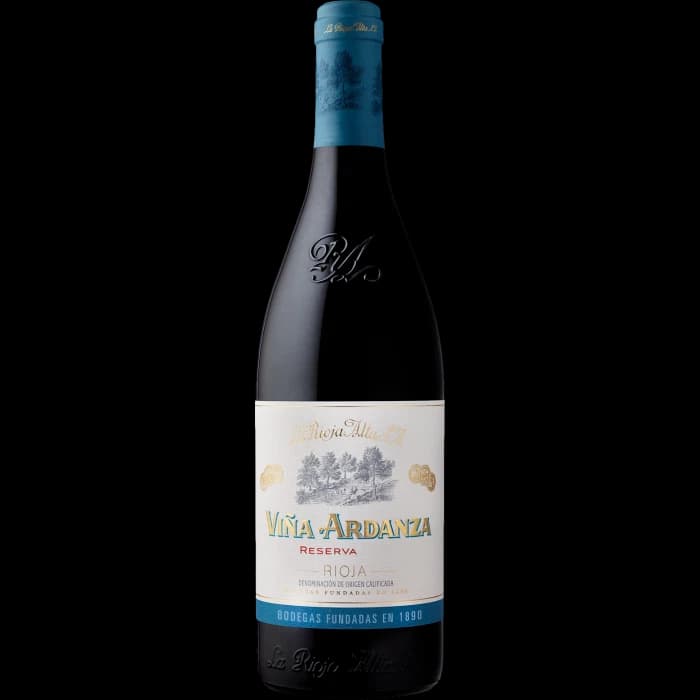
In La Rioja Alta's notes on Viña Ardanza 2020, there is a phrase that looks, at first, like a contradiction. The producer describes the wine on the palate as standing out for its "frescura inicial": its initial freshness.
This is a wine whose Tempranillo spent three years in barrel, and whose final blend was bottled more than four years after the grapes were picked. By the ordinary logic of the word, fresh is precisely what it should not be.
But the ordinary logic of the word may be the problem. We tend to use "fresh" as if it meant "new": recently made, recently bottled, recently arrived. The two ideas travel together so often that it is easy to forget they are different claims. One is about a date. The other is about what is in the glass.
Start with the date, because Ardanza makes it unusually easy to count.
The 2020 vintage was harvested by hand at the end of September. The Tempranillo, four-fifths of the blend, came from two vineyards, La Cuesta in Fuenmayor and Montecillo in Cenicero, both more than thirty years old. The Garnacha came from La Pedriza, in Tudelilla, at 550 metres, and was picked twenty days later.
In April 2021, the best lots went into American oak barrels, a fifth of them new. The Tempranillo stayed for thirty-six months and was racked by hand six times. The Garnacha stayed for thirty months and was racked by hand five times. The final blend was bottled in November 2024.
Each racking was a deliberate intervention: the wine was moved by hand, six times for the Tempranillo and five for the Garnacha. This is not time passing over a wine left alone. It is time being worked.
Rioja has a precise vocabulary for time, and it is worth setting Ardanza against it.
Under the classification of the Consejo Regulador of the DOCa Rioja, a red Crianza must be aged for at least two years, at least one of them in oak barrel. A Reserva requires at least three years of ageing, with a minimum of one year in barrel and six months in bottle. A Gran Reserva requires at least five years, with at least two in barrel and two in bottle.
Viña Ardanza is a Reserva. Its Tempranillo spent thirty-six months in barrel: three times the twelve-month barrel minimum for its category, and twelve months longer than the 24-month barrel minimum Rioja sets for a Gran Reserva. Between the harvest at the end of September 2020 and bottling in November 2024, more than four years passed, before the blend had spent a single day in bottle.
The rule sets a floor. Everything above it is choice. That is the first thing the numbers make clear. In this wine, time is not simply something the regulation requires. It is something the producer adds.
The classification carries an assumption of its own. The Consejo Regulador describes its generic category, which carries no minimum ageing, as usually made up of wines in their first or second year that keep their primary characteristics of freshness and fruit. In that sentence, freshness belongs to youth.
Rioja has since complicated its own picture. In 2017 the appellation incorporated the Viñedo Singular, a category for individual vineyards of particular character. Alongside it, a wine can be named by its zone (Rioja Alta, Rioja Alavesa or Rioja Oriental) or by one of the 144 municipalities within the appellation, as a Vino de Pueblo.
It might be tempting to read this as Rioja turning away from age. The Consejo Regulador's own classification says otherwise. The categories of origin and the categories of ageing coexist, and can be combined on the same bottle. Rioja did not replace time with place. It added place without removing time.
That is a more interesting position than a choice between the two. It allows a wine to say two things at once: where it comes from, and how long it was made to wait.
Which brings us back to the word fresh, and to what it actually describes.
Wine science treats freshness as a matter of composition. A 2019 review in the journal Biomolecules, by Morata and colleagues, describes it as the combination of a fruity aroma reminiscent of the grape variety, a moderate ethanol content and high acidity, while also acknowledging that it is an unspecific concept, drawing on acidity, aroma, alcohol and even colour. Age is not among its terms.
That is the strongest support for the distinction this essay began with. If freshness is made of acidity, aroma and alcohol, then a young wine is not fresh by virtue of being young, and an older wine is not tired by virtue of being older. Each has to earn the description in the glass.
It is also where Ardanza stops being an easy example. The 2020 is 14.5 per cent alcohol. The review lists moderate alcohol among the components of freshness; at 14.5 per cent, Ardanza is not an obvious fit for that part of the definition. So the honest conclusion is not that Viña Ardanza is fresh. That is the producer's description, and it should be read as one. The more defensible conclusion is narrower: whatever freshness a wine like this has or lacks cannot be read from its age. It has to be found in what the time produced.
What, then, is the time for?
The technical sheet offers an answer in the language of the vintage. La Rioja Alta describes 2020 as a year with a long growing cycle and fully developed phenolic ripeness, producing wines of great aromatic intensity, with a very good balance between alcohol and acidity, and "very suitable for long ageing". Its winemaker, Julio Sáenz, describes the result as balanced and firm, with considerable scope for ageing in bottle, where it will continue to develop complexity and harmony.
Read carefully, those sentences make a claim about time that differs from the usual one. They do not say the wine is old enough. They say the vintage suited a long process, and that the process is not finished.
The cellar records point the same way. The Garnacha, picked twenty days after the Tempranillo, spent six months less in barrel and was racked one time fewer. The two varieties were given different amounts of time before being brought together. Time was measured out lot by lot, as deliberately as any other part of the blend.
The case against making wine taste new is not a case against young wine. A great deal of wine is made to be drunk early, and the Consejo Regulador's own description of those wines, fresh and fruity, retaining their primary characteristics, is a fair account of what they offer.
It is a case against a confusion. Newness is a date. Freshness is a property. Age is neither a virtue nor a fault but a decision, and in a wine like this one it is a decision made repeatedly: in which lots go to barrel, in how many of the barrels are new, in how long each variety stays, in every racking by hand.
In Rioja, time has long been a measure: of category, of minimums, of years on a label. In a wine like Viña Ardanza, it reads more like a material, something chosen, divided and worked, whose consequences have to be judged in the glass rather than assumed from the date.