Tchotiashvili
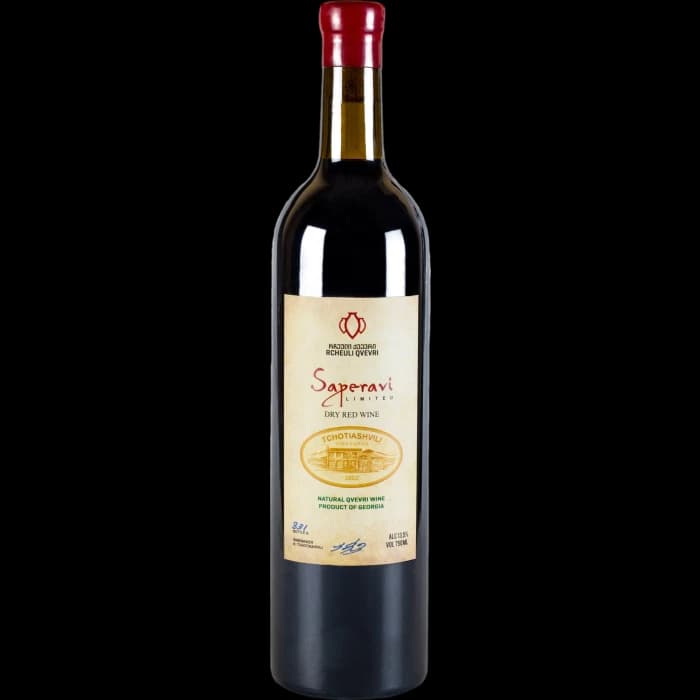
Saperavi Rcheuli Qvevri
Saperavi
The story
A barrel occupies space in a cellar.
A qvevri changes the cellar itself.
The great clay vessels associated with traditional Georgian winemaking are sunk into the earth. What happens inside them therefore takes place beneath the working surface of the cellar: wine below, people above.
At Tchotiashvili, that arrangement belongs to a much longer family story.
The family traces its winemaking history in the Alazani Valley to the beginning of the eighteenth century, when an ancestor built a house in Saniore, near the Lopota river. According to the family, rtveli — the grape harvest — and qvevri winemaking continued there from year to year. Today they describe themselves as the sixth generation carrying that tradition forward.
That continuity matters more than antiquity alone.
In 2002, Kakha and Ucha Tchotiashvili began adding rare grape varieties to their vineyards. Their holdings in Kakheti now include more than forty wine-grape varieties across twelve hectares, with part of the vineyard devoted to small experimental plantings.
Saperavi Rcheuli brings the story back underground. The producer describes it simply as a dry red Saperavi made in qvevri according to the traditional Kakhetian method.
The temptation with an old technique is to treat it as archaeology.
This bottle suggests something more interesting.
Tradition does not have to survive behind glass. It can be reconsidered, planted again, harvested again and passed from one generation to another.
And somewhere beneath the feet of the people working in the cellar, wine is still being made in clay.
The detail
Part of this cellar lies underground. So does the wine.
The place
Where to find it
Ad Affiliate link: if you buy through it, we may earn a commission, at no additional cost to you. How this works
Find this wine